
Or Replica, by Paige Taggart
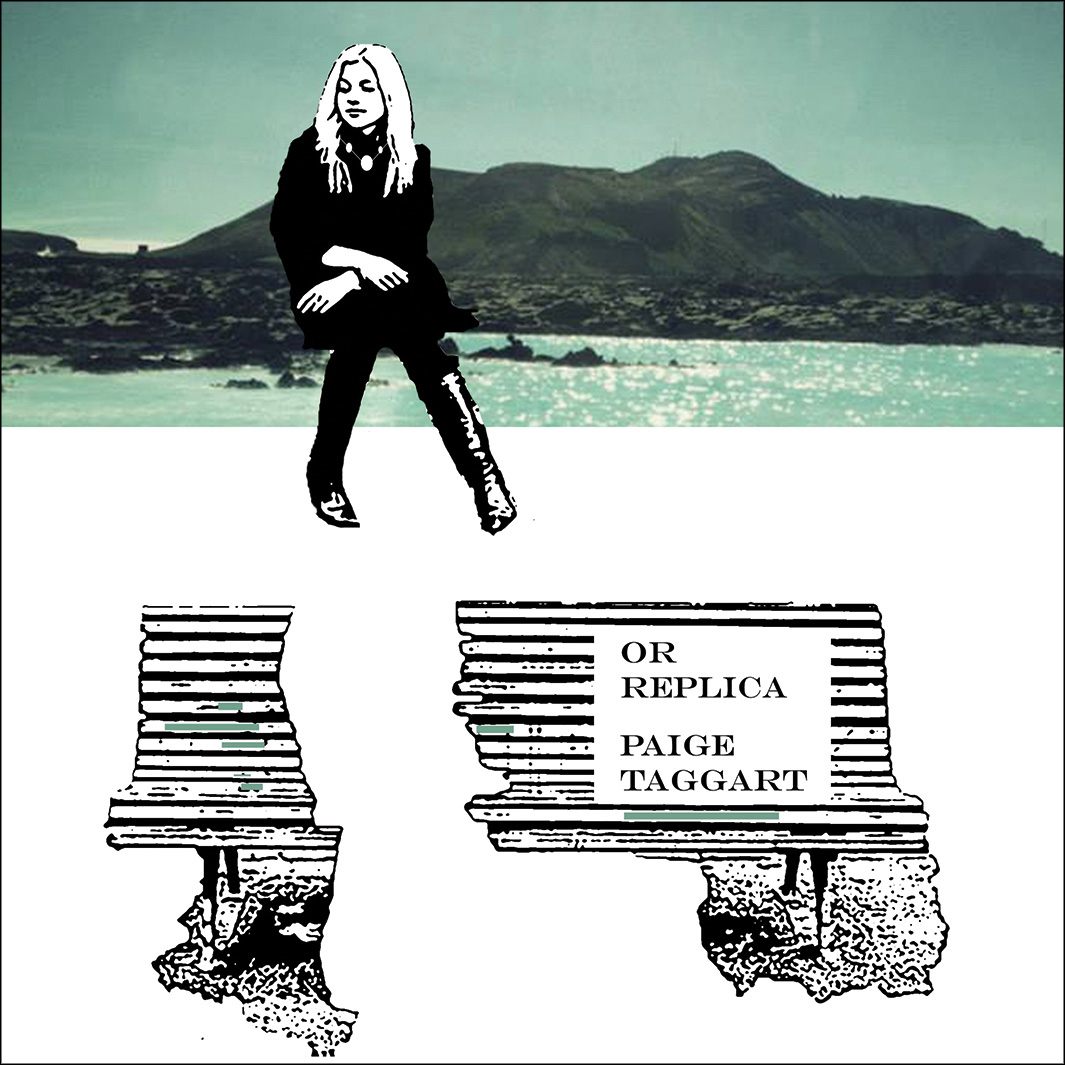
Again and again, Paige Taggart’s Or Replica delivers a peculiar shock of acuity. A window onto the evolution of a singular voice as it seeks to redefine itself in a shifting landscape, these poems stumble, they grope, they test their boundaries and move on. Arriving with great heart, honesty, inventiveness, hilarity, and music, Taggart’s poetry reminds us that the small moments we invest in are important, but that we are a part of larger, changing awareness, that even “the things we leave alone/ will grow full of purpose.”
by Paige Taggart
December 1, 2014
122 pages
ISBN-13: 978-1-936767-35-9
Print $15.95
Purchase
ebook/pdf $9.99
Purchase
Review, Publishers Weekly
“[T]aggart leads a journey through the topography of language, with memory and an abstracted sense of solitude providing the setting….[T]he book alternates between prose poems and sections of short, fleeting pieces which often splinter or interrupt themselves. “It is easy/ to become convinced/ that action makes meaning,” she writes, urging the reader to take heed. But for Taggart, it’s not action but the moments of hesitation, of witty vulnerability that make the collection meaningful.”
Review, decomP
“Loneliness here hits back through the eyes of others, through obligations to others: to be truly alone means not being observed, not being in relation to anyone else, even the you in the poem, for which Taggart apologizes at points, aware that the poem is also a gaze, that poetry also manipulates. Like a time machine or a Somali pirate looking for a child bride, the poem swoops in and grabs you.”
Interview with the Poetry Society of America
“The poems are largely about love, and destroying the past experiences of love in order to arrive at a clean slate and a new hope to embrace love. It’s baby clean love, it’s baby no, I’ve never loved/been loved this way before. “The crescendo of love being arrival,” we arrive at a clearer point of existence on the spectrum of our lives in order to love anew.
The prose poems are often about memory and recollection and the desire to erase memory in order to live with fewer anxieties. I think these poems pushed me to process life’s events as an expression of transient stability.” (Read More)
Review, by Laurie Saurborn Young at American Microreviews & Interviews
“Prone to rapid transition, yet capable of clear, narrative moments, episodes of linguistic dissociation are interspersed with plainspoken confession. . . . Taggart’s words are carefully selected and deliberately stacked, as if rungs on a ladder or stones in a battlement wall. . . . Interstellar, interpersonal, intrapersonal, and environmental, the spaces within these poems are boundless.”
Interview excerpt, with Rob McClennan for 12 or 20 (Second Series)
RM – How did you come to poetry first, as opposed to, say, fiction or non-fiction?
PT – That baby carriage metaphor! Language pulls me around and I follow it to wherever it leads me, and that I find myself at poetry is because poetry is more able to swell and recede with the overall meaning of each word, whereas fiction and non-fiction tends to be much more focused on creating meaning in a clear narrative that exercises language’s’ everyday tendencies; whereas poetry pushes the limits of language, spinning miter into the abstract and strengthening the raw artifice of desires unseen to everyday humans.
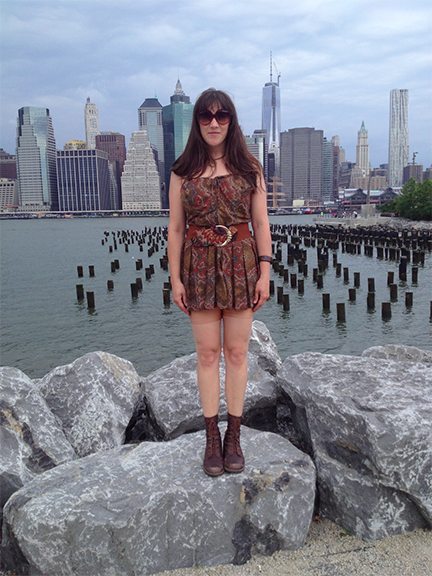
Paige Taggart is from Northern California and currently resides in Brooklyn. She is the author of another full-length collection, Want For Lion (Trembling Pillow Press), and five chapbooks: Last Difficult Gardens, DIGITAL MACRAMÉ, Polaroid Parade, The Ice Poems, and I Am Writing To You from Another Country; Translations of Henri Michaux (forthcoming). She designs and makes jewelry @mactaggartjewelry.com.
— Click for a PDF download–


